
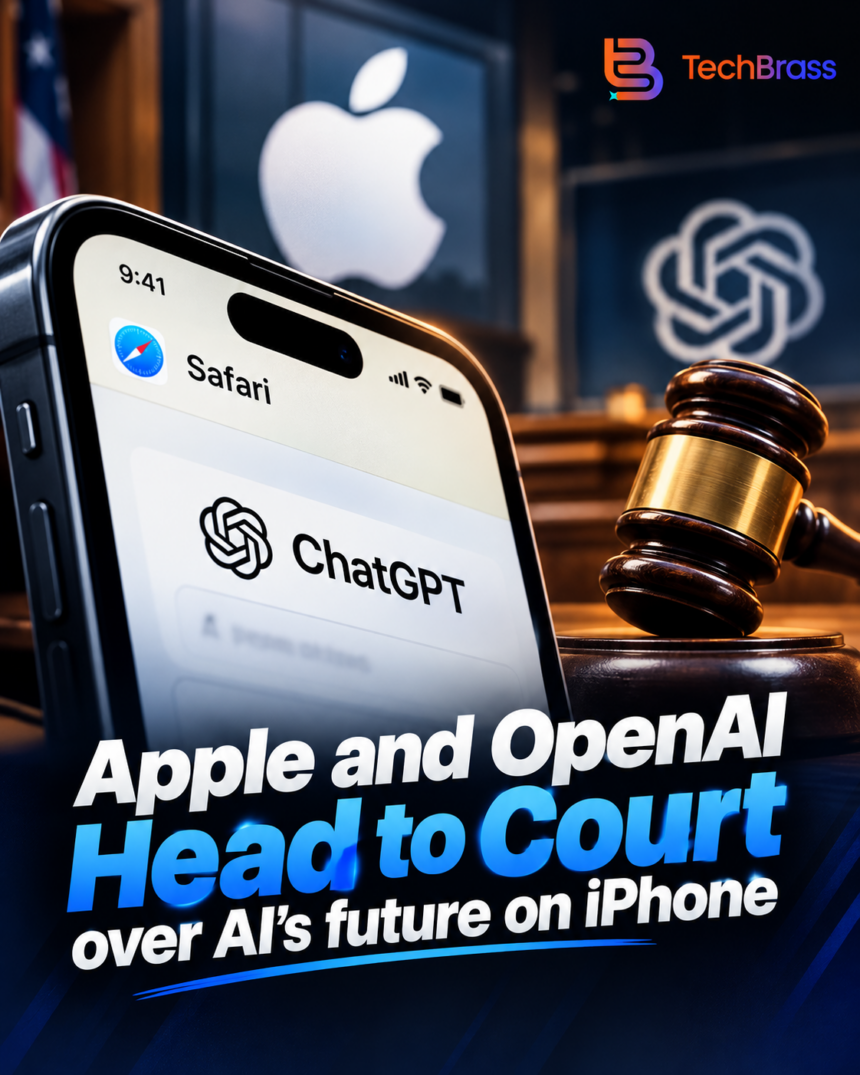
Apple and OpenAI are facing a major legal confrontation over allegations of trade secret theft, confidential product information and competition in the artificial intelligence market. The dispute marks a sharp escalation between two companies that previously worked together to bring ChatGPT capabilities to Apple devices.
On October 14, 2026, the companies appeared before a federal judge in California for a significant hearing in Apple’s lawsuit against OpenAI. During the hearing, OpenAI agreed not to use trade secrets that Apple alleges were improperly obtained by former employees. The agreement came after the judge indicated that he was highly likely to grant Apple an injunction restricting the use of the disputed information. Source: Bloomberg Law.
However, the dispute is about more than confidential documents. It also highlights the growing competition to build AI-powered consumer devices, attract experienced engineers and control the technologies that could shape the next generation of personal computing.
Why Is Apple Suing OpenAI?
Apple filed its lawsuit in July 2026, accusing OpenAI and two former Apple employees of participating in a scheme to obtain confidential information about Apple’s products and engineering operations.
According to Apple’s allegations, the information included product designs, manufacturing processes, component technologies, testing methods and supply-chain details. The company claims that some former employees improperly accessed or retained sensitive materials after moving to OpenAI.
Apple also alleges that its former employees were encouraged to share confidential information during the recruitment process.
OpenAI has denied wrongdoing. The company argues that Apple’s claims lack merit and that employees should be free to move between competing technology businesses. It has also maintained that it has no need or desire to use Apple’s trade secrets. Source: Reuters.
Importantly, these are allegations in an ongoing legal dispute, not a final court finding that OpenAI stole Apple’s intellectual property.
What Happened at the October 14 Court Hearing?
The latest hearing produced an important development for both companies.
OpenAI agreed not to use the trade secrets Apple claims were improperly obtained while the dispute continues. The agreement also requires OpenAI to preserve and collect forensic images of devices belonging to 14 employees that may contain Apple’s confidential information.
The judge indicated that he was highly likely to grant Apple’s requested injunction, although he questioned whether Apple’s broader request to inspect all potentially relevant devices and data repositories was necessary.
The agreement gives Apple additional protection against the potential use of disputed information while the case proceeds. At the same time, it allows OpenAI to avoid an immediate court-ordered injunction on the terms originally sought by Apple.
The court has also allowed Apple expedited access to certain digital files and depositions involving former employees. The wider case is expected to proceed toward trial in 2027, although the exact schedule may change. Source: Bloomberg Law.
OpenAI Raises Its Own Allegations Against Apple
The dispute has become more complicated because OpenAI has raised allegations of its own.
In a court filing reported on October 14, OpenAI alleged that a former employee who left the company for Apple transferred more than 100 files concerning an unreleased OpenAI product to a personal account. OpenAI further alleged that the employee presented the product to senior Apple executives.
According to OpenAI, the materials included unreleased hardware images, engineering information, manufacturing data and supplier details.
Apple rejected the allegations, saying it has procedures designed to prevent new employees from using confidential information from previous employers. The company also said its investigation had found no evidence supporting OpenAI’s claims.
These competing accusations make the case particularly significant. Both companies are now raising concerns about how confidential information may move when employees change employers.
Neither company’s allegations should be treated as proven misconduct. The evidence and the parties’ arguments will need to be assessed through the legal process. Source: Reuters.
Why the Lawsuit Matters to the AI Industry
The Apple vs OpenAI lawsuit could have implications beyond the two companies involved.
1. AI hardware is becoming a competitive battleground
Apple has built a major business around devices such as the iPhone, Apple Watch and other consumer electronics. OpenAI, meanwhile, is expanding beyond software and exploring AI-powered consumer hardware.
That shift creates direct competition for engineering talent, product innovation and customer attention.
As AI assistants become more integrated into everyday life, companies may compete not only over the intelligence of their models but also over the devices through which people access them.
2. Trade secrets are critical to technology companies
A trade secret can include confidential engineering designs, manufacturing methods, product specifications or other commercially valuable information that a business protects from public disclosure.
For example, a company developing an AI-enabled smart speaker may invest heavily in microphone design, acoustic engineering, component selection and manufacturing processes.
If confidential information is improperly transferred to a competitor, it could potentially reduce the time or expense required to develop a similar product. Whether that happened in this case remains disputed.
The lawsuit therefore highlights the importance of protecting intellectual property throughout product development.
3. Employee recruitment requires stronger safeguards
Technology companies routinely recruit experienced engineers from competitors. This movement can help professionals advance their careers and allows businesses to attract specialised talent.
However, employees must distinguish between their professional experience and information that belongs to a former employer.
Businesses can reduce risks by introducing clear recruitment policies, documenting access to confidential files, conducting appropriate exit procedures and training employees on intellectual property obligations.
These measures are relevant to startups and established businesses alike.
Could the Lawsuit Affect Apple’s and OpenAI’s AI Products?
The case could influence how both companies approach product development, although it is too early to predict the final impact.
Apple may seek to ensure that its proprietary technologies remain protected as it expands its AI capabilities. OpenAI, meanwhile, will want to continue developing its own products without restrictions arising from the allegations.
The legal dispute could affect how the companies manage certain employees, preserve technical records and demonstrate that their products were developed using legitimate information sources.
For customers, the most important questions are whether the dispute changes product availability, delays launches or affects the companies’ broader AI strategies. No specific consumer impact should be assumed until the companies or the court provide further information.
What Does This Mean for Startups and Entrepreneurs?
The case offers practical lessons for businesses developing AI tools, software and connected devices.
Here are five steps companies can take to reduce intellectual property risks:
- Protect confidential information. Limit access to sensitive files according to employees’ roles and responsibilities.
- Document product development. Maintain records showing how designs, code and technical decisions were created.
- Create clear hiring policies. Tell new employees not to bring or disclose confidential materials from previous employers.
- Manage employee departures carefully. Revoke access promptly and follow established procedures for company devices and data.
- Seek legal advice when necessary. Businesses should consult qualified legal professionals when trade secrets, employment agreements or intellectual property rights are in question.
For startups, these steps are especially important because a dispute over proprietary technology can consume resources, damage business relationships and distract teams from product development.
Frequently Asked Questions
Why did Apple sue OpenAI?
Apple alleges that OpenAI and former Apple employees were involved in obtaining confidential information about Apple’s products and technology. OpenAI denies wrongdoing, and the allegations remain subject to the legal process.
Did OpenAI admit to stealing Apple’s trade secrets?
No. OpenAI’s agreement not to use the information Apple claims was improperly obtained is not an admission that the alleged theft occurred. OpenAI has denied Apple’s accusations.
What happened at the October 14, 2026 hearing?
OpenAI agreed not to use the disputed trade secrets while the case proceeds. The agreement also includes requirements to preserve and collect forensic images of certain employee devices. The judge had indicated that he was highly likely to grant Apple an injunction.
Has Apple also been accused of taking confidential OpenAI information?
Yes. OpenAI has alleged that a former employee who joined Apple transferred more than 100 files relating to an unreleased product to a personal account and presented the product to Apple executives. Apple denies the allegations and says it found no supporting evidence.
When will the Apple vs OpenAI lawsuit end?
The case is expected to move toward trial in 2027, although the timing could change. The final outcome will depend on further proceedings and the evidence presented.
Conclusion: A Defining Legal Battle for AI Competition
The Apple vs OpenAI lawsuit illustrates how quickly cooperation can turn into competition as technology companies pursue new markets.
Apple wants to protect its confidential product information, while OpenAI is expanding its ambitions beyond AI software into consumer hardware. Both companies face questions about intellectual property, employee mobility and the boundaries of fair competition.
The latest court hearing represents an important development, but it does not settle the underlying allegations. As the case progresses, its outcome could offer valuable lessons for technology businesses seeking to innovate while protecting their proprietary information.
For startups, entrepreneurs and technology professionals, the broader message is clear: innovation depends not only on building powerful products but also on respecting intellectual property and maintaining strong information-security practices.
Want to understand how major technology companies are shaping the future of AI? Visit TechBrass for more technology news, business insights and practical analysis of the developments transforming the digital world.