
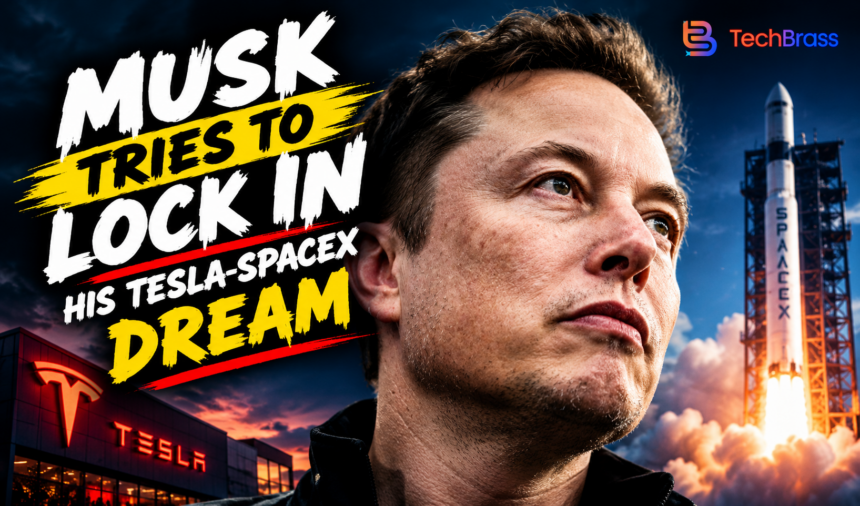
Elon Musk may be preparing to bring two of his biggest businesses under one corporate roof: electric vehicle maker Tesla and aerospace company SpaceX. If the proposed merger goes ahead, it could create a technology giant valued at approximately $3.5 trillion to $3.7 trillion, combining electric vehicles, rockets, satellite internet, artificial intelligence (AI), robotics and advanced computing.
The idea is no longer just market speculation. Musk has confirmed that both companies have formed special committees of independent directors to explore a possible combination. However, the companies have not agreed on the terms, and Musk has acknowledged that completing a deal is far from guaranteed.
The potential timing has also attracted attention. Some analysts believe a deal could be announced while the current US administration is still in office, partly because regulatory and political conditions could affect how a transaction of this size is reviewed. That is an analyst scenario, not confirmation that Musk has set a deadline tied to President Donald Trump’s departure.
For investors, technology businesses and everyday consumers, the bigger question is whether combining Tesla and SpaceX would accelerate innovation—or create a complicated corporate empire with significant financial, regulatory and governance risks.
What Is the Proposed Tesla–SpaceX Merger?
Tesla and SpaceX operate in different industries, but their technology ambitions increasingly overlap.
Electric vehicles, battery storage, autonomous driving, AI-powered robots and large-scale manufacturing. Rocket launches, Starlink satellite internet, space infrastructure and expanding AI-computing operations.
A merger would combine these businesses into a single corporate structure. Investors could gain exposure to both companies through one investment, while the businesses could potentially share engineering resources, infrastructure and capital.
However, a combined company would not automatically make every project more successful. It would also bring together businesses with different customers, operating costs, regulatory obligations and commercial risks.
Why Does Elon Musk Want to Combine Tesla and SpaceX?
Musk has publicly supported the idea, pointing to opportunities in AI, chip design, robotics and connectivity. Several strategic reasons help explain the proposal.
1. Build a larger artificial intelligence business
AI is becoming central to both companies’ plans.
Tesla is investing in autonomous driving and its Optimus humanoid robot programme. SpaceX, meanwhile, is expanding its computing and AI-related activities. Combining their capabilities could help coordinate the chips, computing infrastructure and software these projects require.
For example, Tesla’s AI systems could benefit from access to shared computing resources, while SpaceX could potentially use Tesla’s manufacturing experience to help scale hardware production.
These are potential advantages, not proof that a merger would deliver faster or cheaper development.
2. Connect vehicles and robots through satellite technology
SpaceX operates Starlink, its satellite internet service. Tesla develops vehicles and autonomous systems that depend on reliable connectivity and software.
A closer relationship could create opportunities to connect future vehicles, robotaxis and robots in areas where conventional networks are limited. Satellite connectivity could become particularly useful for fleet operations and remote infrastructure.
Still, satellite internet would complement rather than automatically replace cellular networks, and real-world deployment would depend on cost, coverage, technical requirements and regulation.
3. Share battery, manufacturing and computing expertise
Tesla has experience in battery technology, energy storage and large-scale factory production. SpaceX needs sophisticated manufacturing systems and substantial power and computing infrastructure for its ambitions.
A combined business could coordinate investment in these areas instead of negotiating across separate corporate structures. The companies are already working together on Terafab, a proposed semiconductor and AI-computing project intended to support their technology plans.
The key question is whether shared operations would create enough value to justify the complexity of combining two enormous businesses.
Why Is the $3.7 Trillion Valuation Getting Attention?
The headline valuation reflects the enormous scale of the companies involved. Recent reporting has placed their combined market value at roughly $3.5 trillion, while some analyst scenarios put a potential transaction closer to $3.7 trillion.
That figure needs context.
A combined market valuation is not the same as a confirmed purchase price. It is an estimate based on the companies’ market values and possible transaction structures. The final terms, if an agreement is reached, could differ significantly.
The companies must still determine how the transaction would work, including how shares would be exchanged and how ownership would be divided.
What could happen to investors?
If the merger proceeds, investors may face several possibilities:
Tesla shareholders could gain exposure to SpaceX’s launch, satellite communications and space-related businesses.
SpaceX shareholders could gain exposure to Tesla’s vehicles, energy storage, autonomous-driving and robotics operations.
Both groups would become exposed to a wider range of business risks, capital requirements and regulatory challenges.
One of the biggest unresolved issues is how much Tesla shareholders would receive in exchange for their ownership. Analysts have disagreed about whether a merger should include a premium for Tesla investors.
For individual investors, the lesson is simple: a larger company is not automatically a better investment. The deal’s price, governance structure, future cash needs and long-term performance would matter more than the headline valuation alone.
Is Elon Musk Rushing to Complete the Deal Before Trump Leaves Office?
The timing has become part of the discussion because some analysts believe a transaction could be easier to pursue under the current US administration than under a future political environment.
A Barclays analysis, as reported by Axios, described a possible path toward a deal announcement in late October or early November 2026, with another scenario involving a longer process. The analysis suggested that regulatory conditions during the Trump administration could be a consideration.
But there is an important distinction between an analyst’s forecast and a confirmed company plan.
As of the latest reporting, there is no publicly confirmed deadline requiring Tesla and SpaceX to merge before Trump leaves office. The companies’ independent committees are still evaluating the proposal, and Musk has said a deal is not certain.
Political timing could influence the business calculation, but it cannot replace the required corporate approvals or guarantee regulatory clearance.
The Biggest Obstacles Facing a Tesla–SpaceX Merger
A transaction of this size would face several major hurdles.
1. Tesla shareholder approval
Musk said that a deal would require approval from 50% of all Tesla shares, not merely 50% of the votes cast. He described this as a high hurdle.
Shareholders would need to decide whether the proposed terms fairly reflect Tesla’s value and whether combining the companies would benefit them over the long term.
2. Conflicts of interest and corporate governance
Musk leads both companies and has significant financial interests in each. That creates a sensitive question: how can directors ensure that the terms are fair to investors on both sides?
Both companies have established committees of independent directors to examine the potential merger. Musk has said he cannot participate in those committees’ discussions because he is a conflicted party.
The committees’ independence and the transparency of their decisions will be important to investor confidence.
3. Government regulation and national security
SpaceX works with US government agencies, including defence-related customers, while Tesla has major manufacturing and commercial interests in China.
Combining the companies could attract additional scrutiny over national security, sensitive technology, supply chains and cross-border business relationships. Regulatory challenges would depend on the final deal structure and the authorities involved.
4. The cost of delivering ambitious technology projects
Tesla and SpaceX are pursuing projects that require significant engineering, manufacturing and capital investment. These include autonomous vehicles, humanoid robots, advanced AI computing and next-generation space infrastructure.
Bringing them together would not remove the technical challenges or guarantee that the projects become commercially successful. It could instead concentrate more of the risks within one company.
What Could the Merger Mean for the Technology Industry?
If completed, the deal could reshape competition across several sectors.
Electric vehicles: Tesla could gain closer access to satellite connectivity and additional computing resources.
Space technology: SpaceX could draw on Tesla’s experience in batteries, energy systems and factory automation.
Artificial intelligence: Shared chips, computing infrastructure and engineering teams could support more integrated AI development.
Robotics: Tesla’s humanoid robot programme could benefit from a broader technology ecosystem, although commercial success would remain uncertain.
Telecommunications: Starlink could become more closely integrated with connected vehicles and autonomous systems.
For startups and established technology firms, the wider lesson is that AI, hardware, connectivity and energy are becoming increasingly interconnected. Companies that coordinate these capabilities effectively may gain an advantage—but scale alone does not guarantee innovation.
For businesses in Nigeria and other emerging markets, the potential effects could be indirect but meaningful. Changes in satellite internet, AI infrastructure, connected devices and electric-vehicle technology may influence the tools available to entrepreneurs, developers and service providers. Actual local benefits would depend on pricing, service availability, infrastructure and regulation.
Could the Merger Actually Happen?
The proposal has moved into a formal evaluation stage, but it remains uncertain.
The main steps would include:
Independent review: The special committees must examine the proposed structure and negotiate terms.
Agreement on valuation: Both sides must determine how the companies would be valued and how shareholders would be compensated.
Shareholder approval: Tesla investors would need to meet the required voting threshold, while any other required corporate approvals would also have to be secured.
Regulatory review: Relevant authorities would assess the transaction under applicable laws.
Integration planning: If approved, the companies would need to decide how to combine their operations, technology and financial resources.
There is also a new complication: Reuters reported on October 22 that Musk’s public endorsement of the deal has raised concerns among people involved in the discussions, who worry it could invite greater shareholder scrutiny and delay negotiations.
That does not mean the merger will fail. It does show why a transaction of this size cannot be treated as a done deal.
Frequently Asked Questions
1. Are Tesla and SpaceX officially merging?
No completed merger has been announced. Both companies have formed special committees to explore the possibility, but the terms have not been finalised.
2. How much would the combined company be worth?
Recent estimates put the potential combined market value at approximately $3.5 trillion, with some transaction scenarios approaching $3.7 trillion. The final valuation would depend on the deal’s structure and terms.
3. Why would Tesla and SpaceX want to merge?
The companies could potentially share AI technology, semiconductor development, robotics expertise, satellite connectivity, battery systems and manufacturing capabilities. However, the actual benefits would depend on how effectively they integrate these operations.
4. Is Elon Musk trying to complete the merger before Donald Trump leaves office?
Some analysts have discussed the possibility of completing the transaction during the current administration, partly because they expect a more favourable regulatory environment. However, no confirmed deadline tied to Trump’s departure has been announced.
5. Would Tesla shareholders automatically receive SpaceX shares?
Not yet. The companies have not announced a final exchange ratio or transaction structure. Any share exchange would depend on the terms eventually negotiated and the necessary approvals.
6. Could the merger affect Tesla’s stock price?
Merger developments can influence investor expectations and share-price movements. However, the direction and scale of any future movement are uncertain. Investors should evaluate the proposed terms, business fundamentals and risks rather than assume a merger would automatically increase Tesla’s value.
7. What would the merger mean for AI and robotics?
A combined company could coordinate investment in AI chips, computing infrastructure, autonomous vehicles and humanoid robots. Nevertheless, these projects face significant technical and commercial challenges, and integration alone would not guarantee success.
Conclusion: A Technology Giant in the Making—or a Risky Corporate Bet?
An Elon Musk merger involving Tesla and SpaceX could unite electric vehicles, space exploration, satellite communications, robotics and AI infrastructure on an unprecedented scale.
The strategic logic is clear: these technologies increasingly depend on shared computing power, advanced manufacturing, connectivity and energy. A combined business could potentially coordinate those resources more efficiently.
But the challenges are equally significant. Shareholder approval, valuation disagreements, conflicts of interest, regulatory scrutiny and the cost of ambitious technology projects could all complicate the deal.
For now, the Tesla–SpaceX merger remains a proposal under evaluation, not a completed transaction. Whether it becomes reality will depend on the terms, the shareholders and the ability to demonstrate that combining the companies creates more value than keeping them separate.
Follow TechBrass for the latest updates on AI, electric vehicles, space technology, startups and the business decisions shaping the future of innovation.