

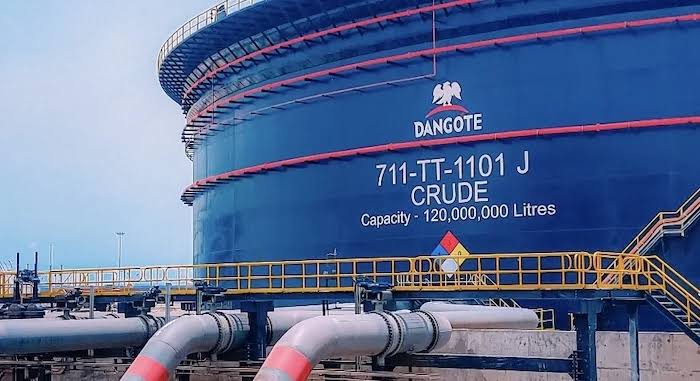
Nigeria’s Dangote Petroleum Refinery and Petrochemicals has recorded a major financial turnaround, reporting $4.73 billion in net profit for the first nine months of 2026 as higher production, improved operational reliability and stronger refining margins boosted its performance. The development marks a significant milestone for one of Africa’s largest industrial projects and highlights Nigeria’s growing role in the global energy market.
According to results released on October 13, 2026, the refinery generated $22.48 billion in revenue between January and September, compared with $9.2 billion during the corresponding period of 2025. The company also moved from a net loss of $117.2 million in the same period last year to a substantial profit.
The results demonstrate how large-scale industrial infrastructure can create new commercial opportunities when production capacity, operational efficiency and market demand align.
For Nigeria, the refinery’s performance also raises important questions about domestic fuel supply, export opportunities, energy security and the future of industrial investment across Africa.
Dangote Refinery Profit Surges Following Full-Capacity Production
The latest financial performance reflects the refinery’s transition from its initial operational ramp-up to large-scale commercial production.
The facility, located in the Lekki area of Lagos State, was developed to expand Nigeria’s domestic refining capacity and reduce its reliance on imported petroleum products. However, operating a refinery of this scale involves more than processing crude oil. It also requires reliable equipment, efficient production systems, effective logistics and access to profitable markets.
According to the reported results, the refinery’s improved performance was supported by three major factors:
Higher refining throughput: Processing more crude oil enables the company to produce and sell greater volumes of refined petroleum products.
Improved operational reliability: More consistent operations help reduce disruptions and support better use of installed equipment.
Stronger refining margins: Favourable market conditions can increase the difference between the value of refined products and the cost of crude oil and processing.
Together, these factors helped the company strengthen its financial position and expand its commercial reach.
Key Financial Results: Revenue Reaches $22.48 Billion
The refinery’s latest results reveal the scale of its financial turnaround.
Net profit
$4.73B
January–September 2026
Revenue
$22.48B
January–September 2026
EBITDA
$5.52B
Operating earnings measure
Operating cash flow
$3.68B
Cash generated from operations
Source: Reported nine-month 2026 results. Figures are in US dollars.
The company recorded a net loss of $117.2 million during the first nine months of 2025. Its return to profitability in 2026 represents a significant change in financial performance.
Revenue more than doubled, reflecting stronger sales and improved production performance. Meanwhile, earnings before interest, taxes, depreciation and amortisation (EBITDA) rose sharply, indicating stronger earnings before those expenses are accounted for.
Operating cash flow also increased substantially. This is important because cash generated from normal business activities can support working capital, maintenance, debt management and future expansion.
However, revenue, profit and cash flow measure different aspects of performance. Strong revenue alone does not guarantee profitability, while positive cash flow helps demonstrate a company’s ability to fund its day-to-day operations.
How Full-Capacity Operations Are Driving Growth
A major industrial facility requires substantial capital investment before it can deliver consistent financial returns. During commissioning and the early stages of production, operators must test equipment, optimise processes and address technical challenges.
As operations stabilise, the business can potentially increase production while making more effective use of its existing infrastructure.
1. Higher production increases sales opportunities
The Dangote refinery has reported processing capacity of approximately 700,000 barrels of crude oil per day, following performance improvements beyond its original installed capacity of 650,000 barrels per day.
Operating at high capacity gives the company the ability to produce larger volumes of products such as petrol, diesel and aviation fuel, subject to demand, feedstock availability and operating conditions.
For example, if a refinery can consistently process more crude oil and convert it efficiently into marketable products, it can supply more customers without needing to construct an entirely new facility.
Nevertheless, higher throughput does not automatically guarantee higher profits. Crude oil prices, operating expenses, product prices and equipment reliability all influence the final financial outcome.
2. Better reliability can reduce operational disruptions
Refineries depend on interconnected processing units, control systems, pumps, pipelines, storage infrastructure and safety equipment.
A problem in one important unit can affect production across several parts of the facility. Consequently, maintenance planning and reliable process control are essential to consistent output.
Improved operational reliability can help a refinery:
Reduce unplanned shutdowns.
Minimise production losses.
Improve the utilisation of expensive equipment.
Maintain more predictable deliveries to customers.
Manage maintenance and operating costs more effectively.
For technology enthusiasts, this illustrates how industrial automation, process monitoring and coordinated control systems can support the performance of complex infrastructure.
The financial results do not, by themselves, establish which specific digital technologies contributed to the improvement. Rather, they demonstrate the commercial importance of reliable industrial operations.
3. Stronger refining margins support profitability
Refining margins represent the difference between the revenue generated from refined petroleum products and the relevant cost of crude oil and processing.
When demand for fuels increases or supply becomes constrained, product prices and refining margins may strengthen. This can make it more profitable for refineries that have sufficient capacity and access to markets.
The reported 2026 performance came amid disruptions to international fuel supplies, which helped create opportunities for refiners capable of supplying markets facing shortages. The Dangote refinery also expanded its sales opportunities beyond Nigeria, including jet fuel exports to Western Europe.
These conditions are important to understanding the results. They also mean that the refinery’s profitability could change if global supply, demand or refining margins shift.
What the Dangote Refinery Means for Nigeria’s Energy Industry
Nigeria has historically relied heavily on imported refined petroleum products despite being a major crude oil producer. A large domestic refinery can help change the economics of this arrangement by processing crude oil locally and supplying products to domestic buyers.
However, the broader impact depends on how effectively the refinery supplies the market and how the country’s wider energy infrastructure develops.
Reduced dependence on imported fuel
Domestic refining can reduce the need to source some finished petroleum products from overseas.
For fuel distributors and businesses, local supply may create additional sourcing options and potentially reduce exposure to international shipping costs, delivery delays and certain foreign-exchange pressures associated with importing finished products.
Still, local production does not automatically guarantee lower pump prices. Retail fuel prices can also depend on crude oil costs, exchange rates, transportation, distribution margins, taxes and market competition.
New export opportunities
The refinery’s ability to sell petroleum products internationally gives it access to a wider customer base.
Exports can generate foreign-exchange earnings and strengthen Nigeria’s position in regional and international fuel markets. Sales to Europe also demonstrate that a refinery located in West Africa can compete in markets beyond its immediate geographical area when pricing, product specifications and logistics are favourable.
For Nigerian businesses, this could create opportunities in transportation, storage, shipping, equipment maintenance and other services connected to the petroleum supply chain.
Potential benefits for industrial development
Reliable access to locally refined petroleum products and petrochemical feedstocks can support businesses that depend on energy and industrial raw materials.
These include manufacturers, logistics operators, transport companies and selected chemical-processing businesses.
The refinery’s longer-term contribution will depend on consistent supply, competitive pricing, infrastructure quality and the ability of local industries to take advantage of the available products.
Dangote Refinery’s Technology and Industrial Significance
Although the refinery’s latest announcement focuses on financial results, its scale also highlights the importance of technology in modern industrial operations.
Large refineries use sophisticated combinations of engineering, instrumentation, automation and process-control systems to convert crude oil into usable products. These systems must coordinate multiple operations while maintaining safety, quality and efficiency.
Several technology areas are particularly relevant to facilities of this scale.
Industrial automation and process control
Automated control systems help operators monitor temperatures, pressure, flow rates and other critical operating conditions. These measurements allow production teams to make adjustments and keep processing units within defined operating limits.
Effective process control is essential because refining involves complex chemical and physical processes that require precise management.
Predictive maintenance and equipment monitoring
Industrial facilities can use equipment sensors and operational data to identify unusual vibration, temperature changes or other warning signs.
When implemented effectively, predictive maintenance can help maintenance teams identify potential equipment failures before they cause major disruptions.
However, the use of any particular predictive-maintenance platform at the Dangote refinery should not be assumed without specific confirmation.
Data analytics and operational efficiency
Data analytics can help industrial operators compare production performance, identify inefficiencies and improve planning.
For example, an operations team could analyse historical equipment performance to determine which units experience frequent downtime or which operating conditions are associated with lower output.
Such applications demonstrate how technology can support the wider objective of turning substantial infrastructure investments into sustainable commercial operations.
Dangote Refinery’s Planned IPO and Expansion Ambitions
The refinery’s profitability is also significant because the company is pursuing a major initial public offering (IPO).
An IPO allows a company to offer shares to investors and potentially raise capital through the stock market. In this case, the proposed offering is intended to broaden investor participation and support the company’s growth ambitions.
Reuters reported that the offering was targeting approximately $1.6 billion, with the application deadline extended to October 27, 2026, to accommodate investor interest.
The company has also outlined plans to expand its refining capacity to approximately 1.4 million barrels per day by 2029. The proposed expansion would increase its production potential and support a broader industrial strategy.
What the IPO could mean for investors
A public share offering can give eligible investors an opportunity to participate in a company’s future financial performance.
For businesses and individuals considering the offering, however, several factors deserve attention:
Profit sustainability: Can the refinery maintain strong earnings if global refining margins weaken?
Valuation: Does the proposed share price reasonably reflect the company’s assets, earnings and future prospects?
Expansion costs: How will additional facilities be funded, and what financial risks could arise?
Market exposure: How sensitive are earnings to crude oil prices, exchange rates and international fuel demand?
Corporate governance: What financial disclosures, shareholder protections and reporting standards will apply?
A strong recent profit does not guarantee future returns. Investors should review the official offering documents and assess the risks before making financial decisions.
Challenges That Could Affect Future Growth
Despite its strong results, the refinery faces challenges that could influence its long-term performance.
Volatility in global oil markets
Petroleum markets are affected by geopolitical tensions, production decisions, transportation constraints and changing demand.
The supply disruptions that helped improve refining opportunities in 2026 may not persist indefinitely. If global supply increases or refining margins narrow, profitability could come under pressure.
Crude oil supply and operating costs
A refinery requires a dependable supply of suitable crude oil. Feedstock availability, purchase prices, transportation and other operating expenses all influence the cost of producing refined petroleum products.
Maintaining reliable operations while managing these costs will remain important as the business grows.
Distribution and infrastructure
Producing fuel is only one part of the supply chain. Products must also be stored, transported and delivered to customers efficiently.
Investment in pipelines, storage terminals, roads, ports and distribution networks can help improve access to markets. Bottlenecks in these areas, however, can increase costs and limit the benefits of higher production.
Environmental and safety responsibilities
Large-scale refining involves emissions, industrial waste, fire hazards and other environmental and operational risks.
Long-term success therefore requires effective safety systems, environmental monitoring, regulatory compliance and responsible management of industrial facilities.
As the refinery expands, maintaining these standards will be essential to protecting workers, surrounding communities and the company’s reputation.
What Businesses and Technology Professionals Should Learn From This Development
The refinery’s financial turnaround offers lessons that extend beyond the oil industry.
First, infrastructure investment requires more than construction. Businesses must achieve operational reliability and find sustainable markets for their products.
Second, technology delivers commercial value when it improves measurable outcomes, such as production efficiency, equipment availability, product quality or cost control.
Third, large industrial projects can create opportunities for smaller businesses that supply technical services, logistics, software, maintenance equipment and professional expertise.
For entrepreneurs and technology professionals, the opportunity is to identify practical problems within these industries and develop solutions that address them.
For example, a Nigerian technology company might develop maintenance-management software, fleet-tracking systems or inventory-monitoring tools for industrial customers. Such businesses would still need to demonstrate reliability, security and a clear return on investment to compete successfully.
The broader lesson is that technology and industrial development are increasingly interconnected. Efficient infrastructure creates opportunities, while effective digital and operational systems can help businesses capture more value from their investments.
Frequently Asked Questions (FAQs)
1. How much profit did Dangote Refinery make in 2026?
Dangote Petroleum Refinery and Petrochemicals reported approximately $4.73 billion in net profit for the first nine months of 2026, covering January through September.
2. What was Dangote Refinery’s revenue in the first nine months of 2026?
The refinery reported revenue of approximately $22.48 billion for the nine-month period, compared with $9.2 billion in the corresponding period of 2025.
3. Why did Dangote Refinery’s profit increase?
The reported improvement was attributed to higher refining throughput, better operational reliability and stronger refining margins. International fuel-supply disruptions also created additional sales opportunities.
4. What is Dangote Refinery’s production capacity?
The refinery has reported processing capacity of approximately 700,000 barrels per day, following improvements beyond its original installed capacity of 650,000 barrels per day.
5. Will Dangote Refinery’s profits reduce fuel prices in Nigeria?
Not necessarily. Higher domestic production can improve fuel availability and reduce reliance on imports, but pump prices also depend on crude oil costs, exchange rates, distribution expenses, taxes and market competition.
6. Is Dangote Refinery planning an IPO?
Yes. As of October 14, 2026, the company was pursuing a proposed share offering targeting approximately $1.6 billion. Reuters reported that the offering deadline had been extended to October 27, 2026. Prospective investors should consult the official offering documents for the applicable terms and eligibility requirements.
7. How could technology improve refinery operations?
Industrial automation, equipment monitoring, predictive maintenance and data analytics can help operators improve reliability, detect potential problems and make more informed production decisions. The effectiveness of these technologies depends on implementation, data quality and operational requirements.
Conclusion: A Major Milestone for Nigeria’s Industrial Growth
Dangote Refinery’s $4.73 billion profit for the first nine months of 2026 marks a significant financial turnaround for one of Africa’s most ambitious industrial investments.
The results reflect higher production, improved operational reliability and favourable refining conditions. They also highlight the commercial potential of large-scale domestic refining, international fuel exports and industrial infrastructure.
However, maintaining this momentum will require disciplined cost management, reliable crude oil supplies, effective distribution networks and careful navigation of changing global energy markets.
The planned IPO and proposed capacity expansion add another dimension to the story, bringing investment, corporate governance and long-term growth into focus.
For Nigeria, the central question is not simply how much profit the refinery can generate today. It is whether the project can sustain efficient operations, support competitive domestic fuel supply and create lasting value for businesses, investors and the wider economy.
At TechBrass, we will continue to cover the technology, business and industrial developments shaping Nigeria and the wider African economy.
Read more on TechBrass for the latest technology news, business insights and developments shaping Africa’s digital and industrial future.