
By TechBrass Editorial Team | October 19, 2026 | Blockchain & Financial Technology
Blockchain technology is moving into a new phase on Wall Street. Instead of simply creating digital versions of stocks, bonds and investment funds, major financial institutions are exploring how blockchain can change the way financial assets are transferred, used as collateral and settled between investors.
The development represents a significant change in how traditional finance approaches blockchain. Rather than treating the technology primarily as a way to access cryptocurrency markets, financial institutions are increasingly exploring its potential to improve the infrastructure behind everyday financial transactions.
For banks, investment managers, businesses and investors, the implications could be substantial. Faster asset transfers, more flexible collateral arrangements and improved connections between digital and traditional markets could reshape parts of the global financial system.
However, the transition is not guaranteed. Regulatory uncertainty, custody requirements and compatibility with existing financial infrastructure remain important challenges.
Here is how BlackRock’s tokenization strategy works, why Wall Street is paying attention and what the shift could mean for the future of finance.
What Is Financial Tokenization?
Financial tokenization is the process of representing ownership rights in an asset as a digital token on a blockchain or another suitable digital ledger.
The underlying asset could be a money-market fund, government bond, company share or other financial instrument. The token provides a digital representation of the relevant ownership interest, subject to the legal and operational arrangements governing that asset.
In traditional finance, transferring ownership often involves multiple systems, intermediaries and recordkeeping processes. Tokenization can help coordinate certain parts of that process through digital infrastructure.
For example, an investment fund could issue eligible investors digital tokens representing their fund shares. Those tokens could then be transferred between approved participants under the fund’s rules.
Importantly, tokenization does not automatically change the investments held by the fund. A tokenized money-market fund may still hold the same types of short-term securities as its conventional counterpart. What changes is how ownership is represented and potentially transferred.
How does tokenization work?
1. An underlying asset exists
A regulated investment fund holds assets such as short-term government securities.
2. Ownership is represented digitally
A token is issued under a structure that connects the digital record to the relevant fund shares and legal rights.
3. Eligible investors transfer the token
Subject to the product’s restrictions, ownership can be transferred using supported digital infrastructure.
4. Legal and financial records remain essential
Custody, compliance, settlement and ownership records must continue to work together. A blockchain entry alone does not eliminate these requirements.
The potential advantage is not simply that an asset becomes digital. It is that its ownership could move more efficiently through connected financial systems.
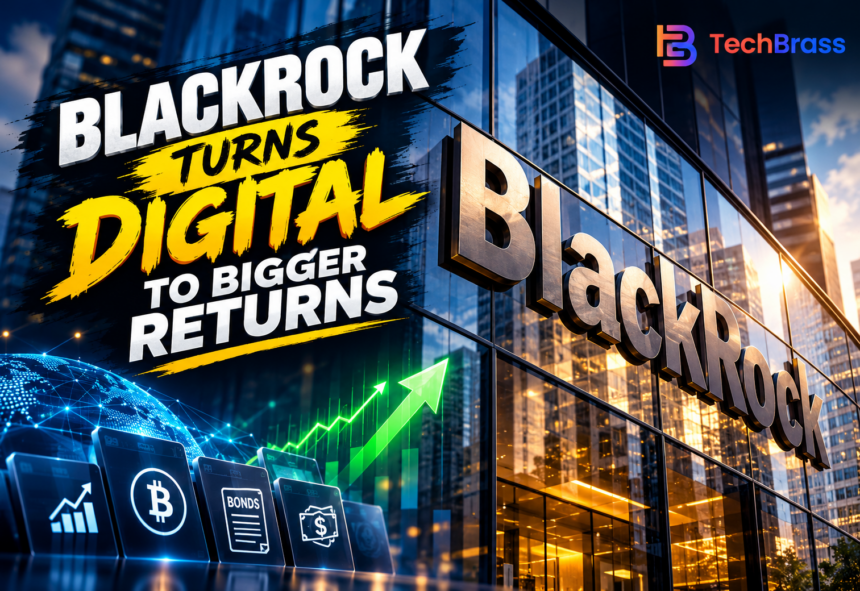
Why Is BlackRock Moving Beyond Digital Investment Products?BlackRock has already established a presence in digital assets through products that connect traditional investment management with blockchain infrastructure.
One notable example is the BlackRock USD Institutional Digital Liquidity Fund, known as BUIDL, launched in 2024. The fund gives eligible investors exposure to a tokenized investment vehicle focused on cash, US Treasury bills and other permitted investments under its offering documents.
In October 2026, reporting based on a Bloomberg interview with BlackRock executives highlighted the company’s broader ambition: using tokenized assets not only within digital-asset markets, but also in the established financial system.
That distinction matters.
Creating a tokenized investment product is one step. Making that product useful across banking, trading, collateral management and settlement systems is a much larger undertaking.
From digital funds to financial infrastructure
BlackRock sees potential for tokenized funds to perform functions that conventional fund shares already serve, but with more flexible transfer mechanisms.
These include:
Moving assets between eligible investors around the clock.
Using fund shares as collateral for financial transactions.
Reducing the need to redeem investments simply to transfer value.
Connecting digital-asset markets with traditional financial services.
Some of these uses are already developing within digital-asset markets. Extending them into conventional financial institutions is more complicated because the firms involved must agree on legal rights, custody, settlement and risk management.
In other words, BlackRock’s ambition is not just to put financial products on a blockchain. It is to make tokenized assets useful within the systems that move money and manage financial risk.
How Tokenized Funds Could Change Wall Street
The most significant opportunity may lie in how financial institutions move assets between one another.
Today, a financial asset may be held in one system while a payment or collateral record is maintained in another. Coordinating these processes can require several steps and intermediaries.
Tokenization could help simplify some of these workflows, provided the relevant systems can communicate and the legal arrangements support the transfer.
1. Using investment funds as collateral
Collateral is an asset pledged to help secure a financial obligation.
For example, a financial institution entering a derivatives transaction may be required to provide collateral to cover potential losses. Conventional money-market fund shares can already serve as collateral in certain arrangements.
A tokenized version could make transferring eligible fund shares easier within a supported digital system.
Imagine a company holding an eligible tokenized fund investment. If a trading counterparty accepts that investment as collateral, the company might be able to transfer the token through the approved infrastructure rather than redeeming the fund shares and moving cash first.
This could reduce operational friction and allow the company to keep its investment in place.
However, the receiving institution must accept the asset, and the transfer must satisfy applicable collateral, custody and legal requirements. Tokenization does not automatically make every investment acceptable as collateral.
2. Moving assets around the clock
Traditional financial markets operate according to established trading, banking and settlement schedules.
Blockchain networks can support transactions outside those conventional operating hours. This creates the possibility of transferring certain tokenized assets at times when traditional systems may be unavailable.
For businesses operating across different time zones, that flexibility could be valuable.
For example, an international financial institution might want to transfer an eligible digital asset on a weekend rather than wait for the next business day.
Nevertheless, 24-hour token transfers do not mean that every fund can be redeemed for cash at any time. Fund dealing rules, banking access, liquidity and settlement arrangements still apply.
3. Reducing unnecessary redemptions
Without a suitable transfer mechanism, an investor who needs to move value may have to redeem an investment, receive cash and then complete a separate transfer.
Where a tokenized fund share can legally be transferred to an eligible recipient, that extra redemption step might not be necessary.
This could help investors keep their capital invested while using the asset for another permitted purpose.
The benefit depends on whether the recipient accepts the token and whether the relevant financial and legal systems support the transaction.
4. Connecting traditional finance with digital assets
Tokenization could create a bridge between conventional investment products and blockchain-based markets.
This is particularly relevant for institutional investors that already use digital assets but also need access to regulated investment products and established financial services.
The long-term opportunity is to make these different environments work together, rather than forcing investors to maintain entirely separate operating systems for each market.
However, this requires more than blockchain technology alone. Financial institutions must also agree on common standards, identity checks, transaction rules and the legal status of digital ownership records.
BlackRock’s BUIDL Fund: A Real-World Example of Tokenization
BlackRock’s BUIDL fund offers a practical example of how traditional financial products can operate using blockchain infrastructure.
Launched in March 2024 with Securitize, BUIDL is a tokenized fund designed to provide eligible investors with exposure to US dollar-denominated investments, including US Treasury bills, cash and repurchase agreements, subject to its governing documents.
Its significance goes beyond the fact that investors can hold a token associated with a fund.
The product demonstrates how a traditional investment structure can connect with digital-asset infrastructure, creating opportunities for fund shares to be used within supported blockchain-based transactions.
According to reporting published on October 19, 2026, BUIDL had grown to approximately $2.3 billion since its launch. BlackRock has also expanded its tokenized cash-management offerings in the US and Europe.
These developments illustrate the growing interest in bringing conventional financial assets onto digital infrastructure.
However, BUIDL is an institutional product, not a general-purpose cryptocurrency or a bank deposit. Access is subject to eligibility requirements, and its investment structure, risks and redemption arrangements differ from those of ordinary savings accounts.
Why does this matter to the financial industry?
BUIDL illustrates three important developments:
Traditional assets can have digital representations. Investors can access eligible fund interests through a blockchain-based structure.
Digital assets can serve practical financial purposes. Tokenized fund shares may be used in supported transactions, including certain collateral arrangements.
Institutional adoption requires established financial safeguards. Custody, eligibility, legal ownership and compliance remain central to how the product operates.
The broader question is whether these capabilities can be integrated into conventional financial markets at scale.
What Is Preventing Tokenized Funds From Becoming Mainstream?
Despite the potential benefits, tokenization faces several challenges.
The technology can support fast transfers, but financial markets require more than the ability to move a digital token between two addresses.
1. Regulatory uncertainty
Financial assets are governed by laws that define ownership, investor rights, custody and the responsibilities of financial institutions.
When an asset is represented on a blockchain, market participants must understand how those existing rules apply to the digital representation and any transfer involving it.
Cross-border transactions make this more complicated because different jurisdictions may apply different legal requirements.
The International Swaps and Derivatives Association has highlighted the need for legal certainty, consistent standards and clarity around collateral treatment before tokenized assets can be used more widely across traditional finance.
2. Custody and investor protection
Investors need reliable ways to establish who owns an asset, who can transfer it and what happens if a service provider fails.
Tokenized assets introduce operational questions involving digital wallets, private keys, custodians and the relationship between blockchain records and official ownership records.
A secure blockchain does not automatically guarantee that every service connected to it is secure.
Therefore, financial institutions must establish appropriate controls to protect assets and resolve disputes.
3. Compatibility with existing systems
Banks, brokers, clearing houses and asset managers rely on established infrastructure.
For tokenized funds to become widely useful, these organisations must be able to incorporate digital assets into their existing workflows without creating unnecessary operational complexity.
If every institution uses a different platform with incompatible rules, the market could become fragmented.
Common technical standards and reliable connections between systems will be important to wider adoption.
4. Liquidity and redemption limits
Tokenization may allow an asset to move at any time, but that does not guarantee that a buyer will always be available or that the asset can be converted into cash immediately.
A tokenized fund still has its own investment strategy, redemption terms and liquidity characteristics.
Investors must understand the difference between the ability to transfer a token and the ability to redeem the underlying investment.
5. Cybersecurity and operational risk
Blockchain-based financial infrastructure can face risks from compromised credentials, software vulnerabilities, smart-contract errors and failures at connected service providers.
Smart contracts are programs that execute predefined instructions. They can automate parts of a financial transaction, but mistakes in their design or implementation can introduce risks.
For institutional adoption, robust security testing, monitoring, recovery procedures and clear responsibility for failures are essential.
What Does Tokenization Mean for Banks, Businesses and Investors?
The shift toward tokenized finance could affect different participants in different ways.
Banks and financial institutions
Banks could use tokenized assets to improve collateral transfers, coordinate settlement and connect digital-asset services with existing operations. However, they would need compatible systems and clear legal arrangements.
Businesses and entrepreneurs
Companies may eventually benefit from more flexible ways to manage eligible investments and collateral. Any savings would depend on transaction costs, service availability and the terms offered by financial providers.
Investors and asset managers
Investors could gain additional ways to hold and transfer certain financial products. Asset managers may also develop new distribution channels and services for eligible clients.
Fintech companies and emerging markets
Fintech providers may find opportunities to build services around digital asset management and settlement. However, local regulation, payment infrastructure, access requirements and currency risks will influence adoption.
For Nigerian businesses and technology entrepreneurs, the development is worth watching because it illustrates how financial services may increasingly combine conventional regulated products with digital infrastructure.
That does not mean that every tokenized fund will be available to Nigerian investors or that using one will automatically make international transactions cheaper. Availability, local rules, foreign-exchange considerations and provider requirements will all matter.
Will Tokenization Replace Traditional Banking?
Not necessarily.
Tokenization is more likely to change how certain financial products are issued, recorded, transferred and used than to eliminate banks and other financial intermediaries altogether.
Financial institutions still perform essential functions, including verifying customers, managing risk, safeguarding assets, providing credit and complying with regulations.
Even if blockchain infrastructure makes some transactions more efficient, institutions will continue to need reliable systems for handling legal disputes, fraud, liquidity and financial obligations.
The transition may therefore involve a combination of traditional and blockchain-based infrastructure.
Some processes could become more automated, while others continue to rely on established custodians, banks, asset servicers and clearing systems.
The central question is not whether blockchain will replace every existing financial system. It is where the technology can improve the systems that already exist.
What Should Businesses Watch Next?
For companies interested in the future of tokenized finance, several developments deserve attention.
Institutional adoption: Watch whether banks, asset managers and clearing organisations begin accepting tokenized assets in more conventional transactions.
Regulatory clarity: Follow changes to rules governing digital securities, custody, settlement and collateral.
Interoperability: Look for systems that can connect different blockchain networks with existing financial infrastructure.
Security standards: Monitor how providers protect digital ownership records, wallets and transaction systems.
Real-world costs: Compare the actual cost, speed and reliability of tokenized transactions with conventional alternatives.
These factors will help determine whether tokenization becomes a widely used part of financial infrastructure or remains concentrated in specialised markets.
For entrepreneurs, the opportunity may lie not only in creating tokens, but also in building the secure services that make tokenized assets useful to businesses and investors.
Frequently Asked Questions
What is BlackRock’s tokenization strategy?
BlackRock is exploring how blockchain-based representations of traditional financial assets can be used beyond digital-asset markets. Its strategy includes tokenized investment funds and opportunities to use eligible fund shares for transfers and collateral within supported financial systems.
What is a tokenized fund?
A tokenized fund represents an investment fund’s shares or interests digitally on a blockchain or another digital ledger. The underlying fund continues to operate according to its investment objectives and governing documents.
What is BlackRock’s BUIDL fund?
BUIDL is the BlackRock USD Institutional Digital Liquidity Fund, launched in 2024 with Securitize. It is a tokenized investment fund that provides eligible investors with exposure to specified US dollar-denominated assets. It is not the same as a bank savings account or a conventional stablecoin.
How can tokenization improve financial transactions?
Tokenization may enable more efficient asset transfers, support certain collateral arrangements and reduce the need for separate redemption steps when ownership changes. The benefits depend on the systems, counterparties and legal arrangements involved.
Is tokenization the same as cryptocurrency?
No. Cryptocurrency generally refers to digital assets such as Bitcoin, while tokenization can represent ownership interests in traditional financial assets, including bonds and investment funds. A tokenized asset may use blockchain technology without being a cryptocurrency.
Are tokenized funds risk-free?
No. Tokenized funds remain subject to the risks of their underlying investments, as well as operational, cybersecurity, custody and regulatory risks. Investors should understand the fund’s terms, eligibility requirements and redemption conditions before investing.
Can Nigerian investors buy BlackRock tokenized funds?
Eligibility depends on the specific product, investor status, jurisdiction and access arrangements. Nigerian investors should verify availability and applicable regulations with the fund’s official documentation and appropriately authorised financial professionals before making any investment decision.
Conclusion: BlackRock’s Blockchain Strategy Is About More Than Digital Assets
BlackRock’s approach to tokenized funds highlights a broader shift in financial technology. The industry is moving beyond simply placing traditional investments on a blockchain and exploring how digital infrastructure could change the way assets move through the financial system.
The potential benefits include more flexible transfers, improved collateral management and better connections between traditional financial institutions and digital-asset markets.
However, wider adoption will require more than technical innovation. Legal certainty, reliable custody, compatible infrastructure, cybersecurity and investor protection must all be addressed.
For technology companies, financial institutions and entrepreneurs, the opportunity is to understand where tokenization solves genuine problems rather than treating blockchain as a solution in search of a use case.
The next major development in blockchain finance may not be a new cryptocurrency. It may be a better way to move, manage and settle the financial assets people and businesses already use.
Follow TechBrass for more technology news, blockchain developments, fintech insights and analysis of the innovations reshaping business.
Join the conversation: Do you think tokenized funds will become a standard part of global finance, or will regulatory and infrastructure challenges slow their adoption?