
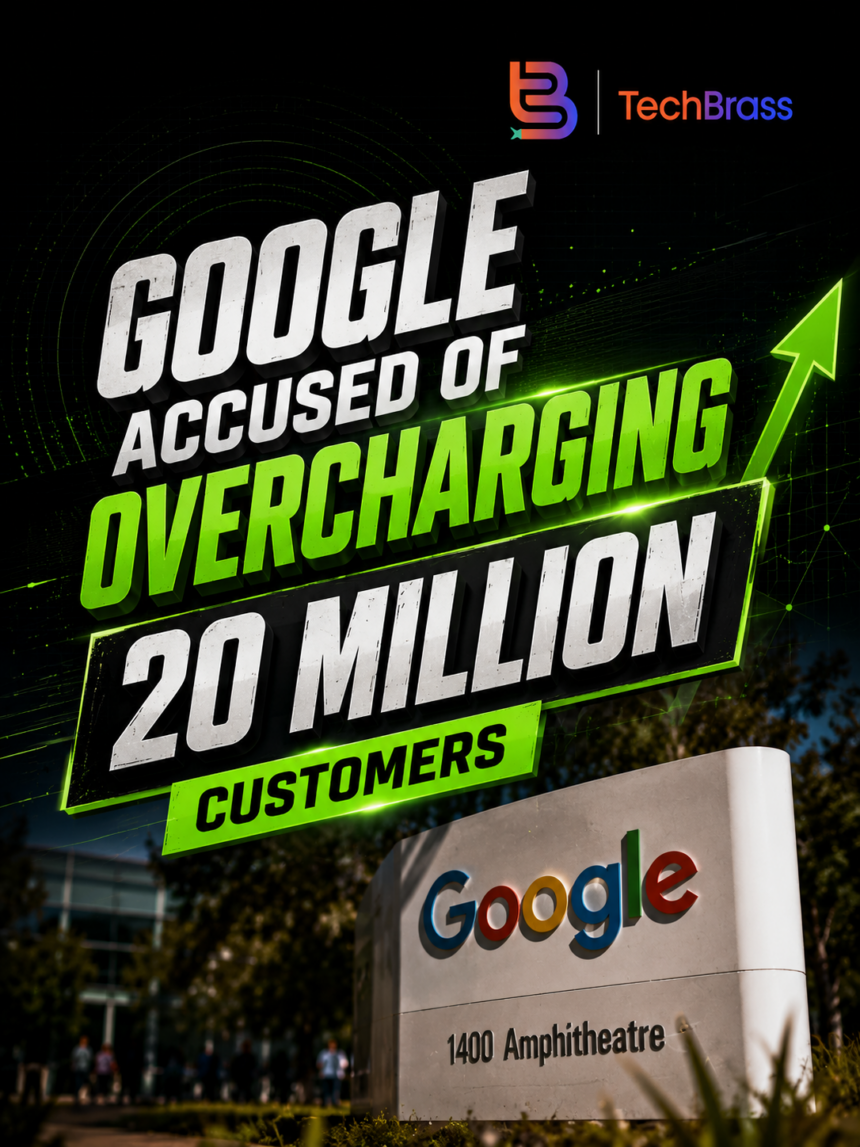
Google is facing a major legal challenge in the United Kingdom over allegations that its Google Play Store fees resulted in millions of consumers paying higher prices for apps, subscriptions and in-app purchases.
The case, which began at the UK’s Competition Appeal Tribunal in London on October 6, 2026, represents around 20 million UK consumers and businesses. Lawyers for the claimants argue that Google’s commissions, which could reach 30% on certain transactions, were excessive and that developers passed some of those costs on to customers.
Google denies the allegations. The company argues that Android provides users with significant choice and that Google Play’s fees are among the lowest in the industry.
The case could become an important test of how much control major technology companies should have over digital marketplaces — and who ultimately pays when those platforms charge developers fees.
What Is the Google Play Store Lawsuit About?
The lawsuit centres on Google’s role in distributing apps and processing digital transactions through Android devices.
The claim alleges that Google abused a dominant position by charging commissions of up to 30% on purchases made through Google Play. According to the claimants, developers could then pass those costs to consumers through higher prices.
The case covers purchases made between October 1, 2015, and July 31, 2026, according to the UK Competition Appeal Tribunal and reports on the proceedings.
The transactions covered can include:
- Paid apps
- In-app purchases
- Digital subscriptions
- Game purchases
- Upgrades and premium features
- Other digital content purchased through Google Play
The central legal question is not simply whether Google charged a commission.
Instead, the tribunal must consider whether Google’s conduct amounted to an abuse of market power under competition law and whether consumers suffered financial harm as a result.
How Could Developers’ Fees Affect Consumers?
The connection between app-store commissions and consumer prices is relatively simple.
Suppose a developer sells a digital product for £10 and a platform takes a percentage of the transaction.
The developer has several options. It could absorb the fee and accept a lower margin, increase the price, change its business model, or potentially offer different purchasing options where platform rules allow them.
The lawsuit argues that Google’s position in the Android ecosystem gave developers limited alternatives and that costs were ultimately passed on to consumers.
However, whether and how developers passed those costs to customers is one of the issues that must be established in the legal proceedings.
Why Does the Case Involve 20 Million Consumers?
The case is being brought as collective proceedings on behalf of a large group of UK consumers and businesses.
The Competition Appeal Tribunal previously certified Elizabeth Coll’s proposed collective action, with the class estimated at approximately 19.5 million consumers and businesses at that stage.
The current reporting rounds that figure to around 20 million.
This is significant because an individual consumer might have suffered only a relatively small loss from any particular transaction.
Collective proceedings allow claims involving many consumers to be considered together rather than requiring every individual to pursue a separate case.
How Much Money Is Being Claimed?
The lawsuit seeks more than £1 billion in damages.
Recent reports have put the potential claim at approximately £1.2 billion, although the precise amount of any eventual compensation would depend on the tribunal’s findings and the damages process.
It is important to distinguish between the amount being claimed and money that consumers will actually receive.
A lawsuit seeking £1.2 billion does not mean that £1.2 billion has been awarded.
The tribunal must first determine the relevant legal and economic questions before any compensation can be established.
Google’s Defence: Android Offers Choice
Google strongly disputes the allegations.
The company argues that Android gives consumers more choice than other mobile platforms, including options around apps and app stores. Google also maintains that Google Play’s fees compare favourably with those charged elsewhere.
This creates an important disagreement between the two sides.
The claimants’ argument
The claimants say Google’s position in the Android ecosystem gave it significant market power and allowed it to impose excessive commissions.
Their argument is essentially that competition was not strong enough to prevent those fees from harming consumers.
Google’s argument
Google disputes the idea that it has the type of dominance alleged in the case.
Its lawyers argue that the relevant market should account for competition and consumer choice across digital platforms rather than treating Google Play in isolation.
The tribunal will ultimately have to assess these competing arguments using evidence presented during the case.
Why App Store Fees Matter to Technology Companies
App-store commissions have become one of the biggest commercial issues in the digital economy.
For a large software company, a platform fee is only one part of the cost structure.
For a smaller developer, however, transaction fees can have a much larger impact on margins.
Consider a hypothetical independent developer selling a £10 digital subscription.
If a platform takes a percentage of that transaction, the developer does not receive the full £10 before other expenses.
The developer may then need to account for:
- Software development
- Cloud infrastructure
- Employees and contractors
- Customer support
- Marketing
- Payment processing
- Taxes
- Platform fees
That is why the rules governing app stores can have a direct effect on the economics of software businesses.
Google Has Faced Similar Pressure Before
The UK lawsuit is not happening in isolation.
Google’s Play Store business has faced scrutiny from regulators and developers in several jurisdictions.
The UK Competition Appeal Tribunal’s records show that a separate collective action brought on behalf of UK app developers alleged that Google abused its dominant position and charged excessive and unfair commissions of up to 30%.
That developer case was settled in September 2026, according to the tribunal’s case record.
The consumer case is separate.
That distinction is important because a settlement involving developers does not automatically resolve claims brought on behalf of consumers.
The UK Is Increasingly Scrutinising Big Tech
The case also fits into a wider shift in how governments and regulators approach large technology platforms.
The UK’s Competition and Markets Authority has designated Google’s mobile platform as having strategic market status under the country’s digital markets regime. The CMA continues to examine Google’s mobile ecosystem and potential measures affecting competition.
The broader debate concerns a fundamental question:
When a company controls a major digital platform, how much freedom should it have to determine the commercial terms under which other businesses reach consumers?
That question extends beyond Google.
Apple’s App Store has faced similar scrutiny, while developers and regulators around the world have challenged the economics and rules of major digital marketplaces.
What Could the Case Mean for App Developers?
The outcome could have implications for developers operating on Android.
If the claimants succeed, the case could strengthen arguments for greater competition and flexibility in digital payments.
Potentially affected areas include:
- Platform commissions — developers could face greater pressure for lower fees.
- Payment options — alternative payment systems could become more important.
- Pricing — developers could have greater flexibility in determining consumer prices.
- Distribution — competition between app stores could become more significant.
- Business models — developers could reconsider how they monetise apps and subscriptions.
However, the precise consequences will depend on the tribunal’s eventual findings.
What Could It Mean for Consumers?
For consumers, the most obvious issue is price.
If app-store fees contribute to higher prices, greater competition could potentially reduce costs or give consumers more purchasing options.
But there is another side to the debate.
Platform operators argue that app stores provide important services, including:
- Security checks
- Payment processing
- Fraud prevention
- App distribution
- Developer tools
- Customer support
- Operating-system integration
Therefore, the debate is not simply about whether platforms should charge fees.
It is also about whether those fees are reasonable given the services provided and the level of competition available.
Why This Case Matters Beyond the UK
The UK proceedings could become another important reference point in the global debate over digital marketplaces.
Technology companies increasingly operate ecosystems rather than individual products.
Google has Android, Google Play, Search, advertising services and cloud products. Apple operates the iPhone, App Store and associated services.
These ecosystems can create enormous benefits for users and developers. However, they can also give platform owners substantial influence over how businesses reach customers.
That is why regulators are increasingly examining whether the advantages of scale can become a competitive disadvantage for smaller companies.
What Businesses Should Learn From the Case
The lawsuit offers several practical lessons for technology businesses.
1. Understand platform economics
Entrepreneurs should calculate how platform fees affect margins before choosing a distribution strategy.
2. Avoid relying on one channel
Where practical and legally permitted, businesses can consider multiple customer-acquisition and distribution channels.
3. Monitor regulatory changes
Digital-market rules are changing rapidly.
Companies that depend heavily on Apple, Google, Amazon, Microsoft or other major platforms should monitor policy changes that could affect their businesses.
4. Understand the difference between revenue and profit
A company can generate substantial sales while retaining relatively little after platform commissions and operating costs.
That distinction becomes especially important for subscription businesses and digital products.
Frequently Asked Questions
Is Google being sued for overcharging UK consumers?
Google is defending a collective lawsuit in the UK alleging that excessive Play Store commissions ultimately resulted in consumers paying higher prices for apps and digital purchases. Google denies the allegations.
How many people are involved in the case?
The case represents approximately 20 million UK consumers and businesses, based on the class described in the proceedings. The Competition Appeal Tribunal previously estimated the class at about 19.5 million.
How much compensation is being sought?
The claim seeks more than £1 billion, with recent reports putting the potential claim at approximately £1.2 billion. This is the amount claimed, not compensation that has already been awarded.
What period does the lawsuit cover?
The consumer claim covers purchases made between October 1, 2015, and July 31, 2026, according to the published case information and reporting.
Does Google admit it overcharged consumers?
No. Google denies the allegations and argues that Android provides significant choice and that Google Play’s fees are competitive.
Does the lawsuit mean everyone will receive compensation?
Not necessarily. The case still has to establish liability and the appropriate level of damages. A claim for £1 billion or more does not mean that amount has already been awarded.
Conclusion
Google’s UK Play Store lawsuit highlights a much bigger issue than one company’s commission structure.
It raises questions about who controls digital marketplaces, how much developers should pay for access to consumers, and whether those costs ultimately become part of the prices users pay.
For developers, the case demonstrates why platform economics matter. For consumers, it shows how decisions made behind the scenes of app stores can potentially affect everyday purchases.
For regulators, meanwhile, the dispute represents another test of whether existing competition rules are sufficient for today’s platform-driven technology economy.
Google continues to reject the allegations, and the tribunal has yet to determine the outcome.
Whatever the final decision, the case will be closely watched by developers, technology companies and consumers because its implications could extend far beyond the Google Play Store.
Follow TechBrass for more technology news, digital-business analysis and stories shaping the future of the tech industry.