
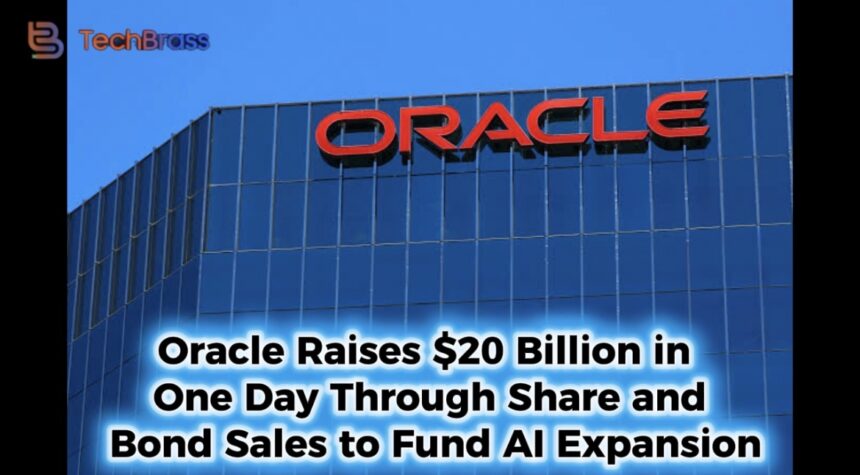
Oracle has raised approximately $20 billion from investors through a major share sale and bond offering, as the technology giant seeks more funding for its rapidly expanding artificial intelligence and cloud infrastructure business.
The share sale raised approximately $9.9 billion, with Oracle selling 86.2 million shares at $116 each — an 11.2% discount to its October 30 closing price of $130.67.
The company also raised another $10 billion through bonds, bringing the combined fundraising to approximately $20 billion.
The development is significant because Oracle is spending heavily to build the data centres and computing infrastructure needed to compete in the AI market. But it also raises questions about the cost of that ambition, the company’s growing financing needs and what the new shares mean for existing shareholders.
One important update to the headline: what was initially reported as an upcoming share sale has now been officially priced by Oracle.
Why Is Oracle Raising So Much Money?
The main reason is Oracle’s aggressive expansion into artificial intelligence and cloud computing.
The company is investing heavily in data centres, servers, networking equipment and computing capacity to serve customers developing and operating AI models.
AI systems require enormous computing resources. As demand grows, companies such as Oracle are competing to secure the infrastructure needed to support them.
Oracle wants to become a major provider of that infrastructure, competing with established cloud giants such as Microsoft and Amazon.
However, building data centres is extremely expensive. The company needs to pay for land, buildings, electricity infrastructure, advanced chips and other equipment before it can generate revenue from the facilities.
That is why Oracle is turning to both stock-market investors and bond investors to finance its expansion.
How the $20 Billion Fundraising Is Structured
Oracle used two different methods to raise the money: selling new shares and issuing debt.
Oracle’s November 2026 fundraising
Share offering
$9.9bn
Net proceeds
Bond offering
$10bn
Net proceeds
$19.9bn
Approximately $20 billion combined
Based on Oracle’s November 2 pricing announcement.
1. The $10 billion share sale
Oracle sold 86,206,897 new common shares at $116 each.
The company expects to receive approximately $9.9 billion after underwriting discounts and estimated offering expenses.
The shares are traded on the New York Stock Exchange under the ticker symbol ORCL.
2. The $10 billion bond sale
Oracle also issued bonds with different maturity dates and interest rates.
These bonds allow Oracle to raise money now and repay investors over time, while paying interest along the way.
Based on the announced amounts and coupon rates, the bonds carry approximately $777 million in annual interest payments once fully outstanding.
Why Did Oracle Sell Shares at an 11% Discount?
This is one of the most interesting aspects of the deal.
Before the fundraising was announced, Oracle shares closed at $130.67 on Friday, October 30.
But the company priced its new shares at $116.
That represents a discount of approximately 11.2%.
Why would a company sell shares below the recent market price?
Large share offerings often require a discount to attract investors willing to purchase a substantial number of shares at once.
The discount makes the offering more attractive, particularly when investors are concerned about the company’s financing needs, future earnings or stock-market performance.
However, the timing was notable.
Oracle shares fell 8.8% to $119.22 on Monday following the fundraising announcement, bringing their losses for the year to approximately 39%, according to Reuters.
The $116 offering price was therefore only about 2.7% below Monday’s closing price, even though it was 11.2% below Friday’s close.
That distinction matters when interpreting the headline discount.
What Does the Share Sale Mean for Existing Oracle Investors?
When a company issues new shares, existing shareholders can experience what is known as share dilution.
Here’s a simple example.
Imagine you own 100 shares in a company with 1,000 shares outstanding. You own 10% of that company.
If the company issues another 100 shares, there are now 1,100 shares outstanding.
You still own your 100 shares, but your ownership percentage falls to approximately 9.1%.
That is the basic idea behind dilution.
Oracle’s offering adds more shares to the market, which means existing shareholders will own a smaller percentage of the company unless they also increase their holdings.
However, issuing shares also brings fresh capital into the business without creating another repayment obligation like borrowing does.
The key question is whether Oracle can invest that money effectively enough to create additional value for shareholders over time.
If the AI and cloud investments generate strong returns, the additional capital could benefit the business. If they fail to deliver sufficient returns, shareholders may be left with dilution and weaker financial performance.
Oracle’s Debt Is Becoming an Important Part of the AI Story
Another reason investors are paying attention is Oracle’s existing borrowing.
Reuters reported that Oracle had approximately $125.34 billion in notes payable and other borrowings as of August 31, 2026.
For comparison, its fiscal 2026 revenue was $67.36 billion.
This does not mean the company is insolvent or unable to meet its obligations. But it shows how significant its financing commitments have become relative to its current revenue base.
Investors are also watching Oracle’s relationship with OpenAI, the company behind ChatGPT.
Oracle has significant exposure to the AI infrastructure race and the demand for computing capacity from major AI developers.
That creates a major opportunity, but it also means the company must manage its spending, customer relationships and financing carefully.
Can Oracle’s AI Investments Really Pay Off?
Oracle has ambitious financial targets.
The company expects its revenue to exceed $225 billion by fiscal 2030, compared with $67.36 billion in fiscal 2026.
That would represent more than three times its fiscal 2026 revenue.
Oracle has also said that its capital spending should peak during the current fiscal year and the next.
Its management has indicated that it expects free cash flow to turn positive in the second half of fiscal 2028.
These targets are important because investors want evidence that the company’s massive AI infrastructure investments will eventually generate enough cash to justify the spending.
However, the competition is intense.
Microsoft and Amazon have much larger cloud businesses, while other technology companies are also investing billions in AI infrastructure.
Oracle needs to win enough customers and generate sufficient revenue from its data centres to make its expansion financially sustainable.
What Happens Next?
Oracle’s share and bond offerings are expected to close on November 4, 2026, subject to customary closing conditions.
The company says the proceeds will be used for general corporate purposes, which may include:
Capital expenditure and infrastructure expansion.
Repayment of existing debt.
Future investments and acquisitions.
Payment of cash dividends.
Share repurchases.
The company has not said that every dollar raised will go directly into AI data centres.
Investors will be watching Oracle’s next financial results for evidence that its infrastructure investments are translating into revenue, profits and stronger cash flow.
The big test is whether Oracle can turn its enormous AI spending into a business that generates sustainable returns.
Frequently Asked Questions
1. How much money has Oracle raised in November 2026?
Oracle announced approximately $20 billion in fundraising through a $10 billion share offering and a $10 billion bond offering. The share sale is expected to generate approximately $9.9 billion in net proceeds.
2. Why did Oracle sell shares at an 11% discount?
The discounted price helped attract investors to a large share offering. The $116 price was approximately 11.2% below Oracle’s October 30 closing price of $130.67.
3. What will Oracle use the money for?
The company says the proceeds may support capital spending, debt repayment, acquisitions, future investments, dividends and share repurchases.
4. Does issuing new shares affect existing shareholders?
Yes. New shares increase the total number of shares outstanding, potentially reducing existing shareholders’ percentage ownership. This is known as share dilution.
5. How much debt does Oracle have?
Reuters reported that Oracle had approximately $125.34 billion in notes payable and other borrowings as of August 31, 2026.
6. Is Oracle raising money because its AI business is failing?
There is no evidence from the fundraising announcement that Oracle’s AI business is failing. The company is raising capital to finance a costly expansion. However, investors are concerned about whether future AI and cloud revenues will justify the spending and financing commitments.
Final Thoughts: Oracle Is Betting Big on the AI Future
Oracle’s $20 billion fundraising exercise shows just how expensive the AI race has become.
The company is raising billions through both equity and debt because building the infrastructure behind artificial intelligence requires enormous amounts of capital.
For Oracle, the opportunity is significant. If demand for AI computing continues growing, its cloud infrastructure could become an important source of future revenue.
But there is another side to the story.
Existing shareholders face dilution, the company has substantial borrowing, and the bonds carry interest rates of up to 8.65%.
Oracle is essentially asking investors to help finance its AI ambitions. The real question is whether those investments will eventually generate enough money to justify the cost.
What do you think? Is Oracle making a smart move by raising billions to compete in AI, or is the company taking on too much financial risk?
Share your thoughts in the comments.