
Africa’s biggest public share offering is turning into a major test of investor appetite for African industry. And the interesting part is that Nigerian investors may have already secured enough commitments to meet the fundraising target before international demand is fully accommodated.
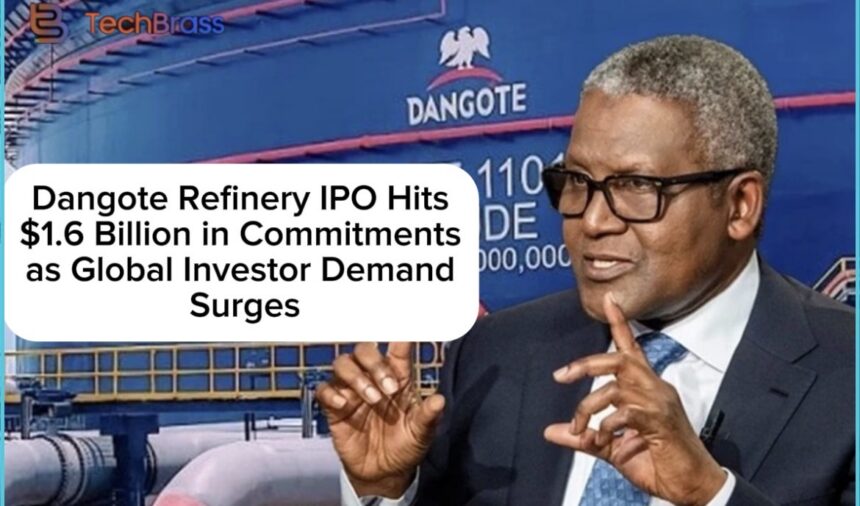
The Dangote Petroleum Refinery and Petrochemicals initial public offering (IPO) has attracted between $1.5 billion and $1.6 billion in fully funded commitments from domestic and retail investors alone, according to a Bloomberg report published on October 27, 2026. The development raises the prospect of a tight share allocation as investors from other countries seek a stake in Aliko Dangote’s refinery business.
For Nigeria’s business and technology ecosystem, the story goes beyond one of Africa’s largest industrial investments. It also highlights how digital investment channels, broader retail participation and access to capital markets could change the relationship between everyday investors and major African businesses.
But strong demand raises an important question: if more people want shares than the company has available, who actually gets them?
Dangote Refinery IPO: The Numbers Behind the Investor Rush
The scale of interest is becoming clearer as the offer reaches its scheduled closing date on October 27.
A separate report by Reuters on October 27 cited sources saying the IPO had attracted approximately ₦6.4 trillion in orders, equivalent to about $4.78 billion at the exchange rate used in the report. That is roughly three times the offering’s original target. Reuters also reported that more than two million investors had subscribed through digital channels.
Here are the key figures behind the Dangote Refinery IPO.
Original fundraising target
$1.63 billion
Approximately ₦2.15 trillion
Reported investor orders
$4.78 billion
Approximately ₦6.4 trillion
Shares on offer
4.1 billion
Ordinary shares
Offer price
₦525
Per share
Sources: Reuters and the approved offer details. Reported order values are not the same as final allocations or money ultimately raised.
The figures tell a striking story. Demand appears to be significantly higher than the amount the company initially planned to raise, although the final allocation and total proceeds will depend on the completed subscription process and applicable offer terms.
That distinction matters. A heavily subscribed IPO does not automatically mean every applicant will receive all the shares requested.
Why Are Investors Rushing to Buy Dangote Refinery Shares?
The refinery is one of Nigeria’s most ambitious industrial projects. Built at an estimated cost of $20 billion, the Lagos-based facility began commercial operations in early 2024 and has become an important part of the country’s fuel supply and export landscape.
For investors, the appeal rests on several factors.
1. Exposure to a major African industrial business
Buying shares gives investors an opportunity to own part of the refinery company, subject to the shares they are actually allocated.
Unlike buying fuel from a filling station, shareholders participate in the business through ownership. Their returns may come from dividends, if declared, and changes in the market value of their shares.
However, neither outcome is guaranteed. A famous founder and a large industrial facility do not automatically make a stock a profitable investment.
2. The refinery’s expansion ambitions
The company has stated plans to increase refining capacity from approximately 700,000 barrels per day to 1.4 million barrels per day by 2029, according to Reuters’ October 27 report.
An expansion of that scale could strengthen its ability to serve domestic demand and export markets. It could also require substantial spending on infrastructure, operations and supporting facilities.
For investors, the important question is whether future earnings and cash flow will justify the cost and risks of that expansion.
3. Access for everyday investors
The offer has been presented as an opportunity for ordinary Nigerians and other eligible African investors to participate in a major industrial company.
According to Reuters, the offering was designed to reach investors who could buy shares with as little as about $4. The official offer price is ₦525 per share, with a minimum subscription of 10 shares, or ₦5,250.
That lower entry point makes participation possible for more people than a large minimum investment would. Still, accessibility should not be confused with affordability for every household.
A sensible investment begins with money someone can afford to leave invested and potentially lose—not money reserved for food, rent, school fees or emergencies.
The Technology Story: More Than Two Million Investors Using Digital Channels
One of the most interesting details is the role of digital investment infrastructure.
Reuters reported that more than two million investors had subscribed through digital channels by October 27.
That figure highlights how technology can support access to a large public share offering. Online application channels can help investors submit applications without relying entirely on paper-based processes or physical visits to financial institutions.
Depending on the approved platform, the process may involve:
Digital investor registration and identity verification.
Electronic submission of share applications.
Online payment through approved channels.
Processing applications and coordinating share allocations.
Electronic crediting of allotted shares to investors’ securities accounts.
These steps depend on the systems and procedures of the authorised receiving agents, brokers, registrars and other relevant institutions. The reported number of digital subscriptions does not, by itself, establish which technologies every provider uses.
Why this matters for African fintech
For fintech companies and financial institutions, a large IPO can demonstrate the potential reach of digital financial services.
A market offering that attracts millions of applicants must handle identity checks, payment processing, investor records and communication at considerable scale. Reliable systems can make that experience more convenient, but they also need to protect sensitive information and reduce errors.
For Nigerian startups, the broader lesson is that digital financial products can help bring more people into formal investment markets. The opportunity is not simply to build another finance app; it is to make financial services more accessible, understandable and trustworthy.
Of course, a convenient interface is only one part of the job. Investors also need accurate information, transparent charges, secure transactions and clear explanations of the risks involved.
What Happens When an IPO Attracts More Demand Than Available Shares?
This is where the story becomes particularly important for investors.
When a public share offering receives more valid applications than the available shares can satisfy, it is described as being oversubscribed.
Consider a simplified example: a company offers 100 shares, but investors apply for 300. Even if every application is valid, the company cannot fulfil every request in full without changing the offer size under its approved terms.
The same principle applies to large public offerings, although the actual allocation rules can be much more complex.
In the Dangote Refinery IPO, Reuters reported that the company was expected to exercise a greenshoe option, which could increase the offer size to as much as $2.1 billion. A spokesperson declined to comment on the demand and the possibility of exercising the option.
A greenshoe option is a provision that allows an issuer to sell additional shares beyond the original offer size, within specified limits and under the approved offer terms.
If exercised, it could help accommodate some additional demand. It would not necessarily guarantee that every applicant receives the quantity requested.
Investors should therefore distinguish between three separate milestones:
Application: An investor submits a request to buy shares.
Allotment: The offer’s administrators determine how many shares the investor receives.
Trading: Once the shares are listed and trading begins, investors can buy or sell them through the applicable market arrangements.
An application is not proof that shares have been allocated. And an allocation is not a promise that the investment will increase in value.
What Does the Dangote Refinery IPO Mean for Nigeria’s Economy?
The IPO is significant because it creates an opportunity for a wider pool of investors to participate in a major Nigerian industrial business.
For the domestic capital market, a successful offering could deepen public participation, bring new investors into the market and increase attention on how Nigerian companies raise money for large projects.
It could also influence how other businesses think about raising capital. Companies that once relied primarily on founders, private investors or bank financing may look more closely at public markets when planning ambitious expansions.
However, one successful IPO will not solve every challenge facing Nigeria’s investment ecosystem. Investor confidence also depends on economic stability, corporate governance, reliable financial reporting, effective regulation and confidence that shareholders will be treated fairly.
Could this create opportunities for startups and technology companies?
Potentially, yes—but the impact is indirect.
A larger, more active capital market can create opportunities for financial technology providers, digital brokerage platforms, payment companies and businesses that help investors understand and manage their investments.
It may also encourage entrepreneurs to think more seriously about the systems they need before seeking public investment: sound accounting, transparent ownership structures, dependable reporting and responsible governance.
For technology founders, there is a useful lesson here. Building a company that attracts attention is one challenge; building a business that can earn and maintain investor confidence is another.
The second is usually harder—and considerably more important over the long term.
The Risks Investors Should Not Ignore
Excitement surrounding a high-profile IPO can make it easy to focus on the potential rewards while overlooking the risks.
Before investing in the Dangote Refinery IPO, prospective shareholders should consider the following.
Valuation risk: A large, strategically important business can still be offered at a price that leaves limited room for future gains. Reuters reported that the proposed valuation had drawn scrutiny in comparison with other listed refiners.
Business risk: Refining margins, crude oil prices, operating costs, exchange rates and competition can affect profitability.
Expansion risk: Increasing capacity requires substantial investment and successful execution. Delays or higher costs could affect future returns.
Market risk: Once shares trade publicly, their prices may rise or fall as investor expectations and business conditions change.
Dividend risk: Shareholders should not assume they will receive regular dividend payments. Dividends depend on company performance, available funds and decisions made under the company’s governance arrangements.
There is also a practical security concern. High-profile investment offers can attract fraudulent websites, fake social media accounts and individuals promising guaranteed allotments.
Nigeria’s Securities and Exchange Commission has warned investors to use authorised subscription channels and verify investment platforms.
Before sending money, investors should read the approved prospectus, verify the receiving agent and avoid transferring funds to personal accounts or relying on unsolicited promises.
What Happens After the IPO Closes?
The offer is scheduled to close on October 27, 2026, following an extension intended to give more eligible investors across African markets time to participate. The company’s published timetable sets out the next steps for processing applications and determining share allocations.
The key developments to watch are:
Final subscription figures: These will clarify the overall demand recorded by the offer.
The final offer size: Investors will want to know whether the company exercises the additional-share option.
Share allocation: The final allotment announcement will explain how shares are distributed under the offer terms.
Stock market listing: Trading will give investors a market price at which allotted shares can be bought and sold, subject to applicable market rules.
The outcome will matter beyond the immediate fundraising. It will provide a useful signal about investor appetite for large African industrial businesses and the ability of the region’s capital markets to support their growth.
For now, the reported demand is impressive. The longer-term test will be whether the refinery can translate its industrial scale into sustainable business performance—and whether the public market can provide investors with the transparency and confidence they need.
Frequently Asked Questions
1. How much has the Dangote Refinery IPO attracted?
Bloomberg reported between $1.5 billion and $1.6 billion in fully funded commitments from domestic and retail investors. Reuters separately reported approximately ₦6.4 trillion, or $4.78 billion, in total orders from Nigerian retail and institutional investors. These are reported figures from different accounts of the offer’s demand, not final proceeds.
2. What is the price of Dangote Refinery IPO shares?
The approved offer price is ₦525 per ordinary share, with a minimum subscription of 10 shares, costing ₦5,250. Investors should consult the official prospectus for the full terms.
3. Does applying for the IPO guarantee that I will receive shares?
No. An application is a request to participate, not a guarantee of full allocation. The final number of shares an applicant receives depends on the allotment process and the approved offer terms.
4. Can investors lose money buying Dangote Refinery shares?
Yes. Share prices can fall, and investors may lose some or all of their invested capital. Dividends are not guaranteed either. Prospective investors should understand the business, valuation and risks before committing funds.
5. Why is the Dangote Refinery IPO important for technology and fintech?
The reported participation of more than two million investors through digital channels illustrates how digital financial infrastructure can help people access large investment offerings. It also highlights the importance of secure payments, identity verification, reliable records and investor education.
Final Thoughts: A Landmark for African Investment?
The Dangote Refinery IPO is shaping up to be a landmark event for Nigeria’s capital market, with reported investor orders substantially exceeding the original fundraising target.
Its significance extends beyond the amount raised. The offering highlights the potential for digital channels to widen access to investment opportunities and for African businesses to draw capital from investors across the continent.
But demand is only the beginning. The real measure of success will be the company’s long-term performance, the transparency of its public-market journey and the experience of the investors who become shareholders.
What do you think? Does the strong demand for Dangote Refinery shares signal growing confidence in African businesses, or should investors be more cautious about the valuation? Share your views in the comments, and follow TechBrass for more technology, business and startup news.