
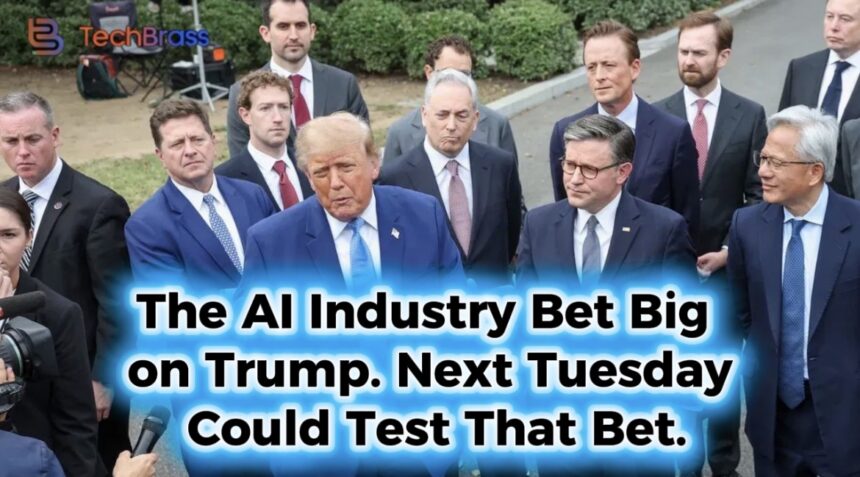
Silicon Valley has spent two years cozying up to Washington. Now the voters get a say.
The midterms are on November 3. AI has landed in the middle of the campaign, even though it isn’t on any ballot.
What Happened
Late last year, Trump took executive action to curb state-level AI laws. He also moved to allow Nvidia to sell advanced AI chips to China, both described as major wins for the industry.
The industry then went to the ballot box. AI-linked super PACs have raised over $200 million and spent $44 million to influence 2026 congressional races. The flagship, Leading the Future, is funded by Marc Andreessen, Ben Horowitz and OpenAI’s Greg Brockman.
What the Industry Wants
The pitch is simple. One national framework instead of a patchwork of state laws, which the industry argues would slow development and hand China an edge. Supporters say that’s not deregulation by stealth. It’s the same argument businesses make about any industry where 50 sets of rules would be unworkable.
Why Critics Say It Could Backfire
Here’s the catch. The public doesn’t seem to share the industry’s enthusiasm.
- A May 2025 survey found more than 70% of likely voters favored a role for regulators in AI policy.
- Congress was essentially unanimous in defeating an earlier state AI regulation moratorium.
- Opposition to data centers over electricity rates and environmental worries has become a midterm flashpoint.
- A separate poll found 76% of Americans worry deepfakes could affect the midterms.
Some analysts argue this creates a split inside Trump’s own coalition. Republicans are reportedly divided between a deregulatory wing and a national-security wing, with no shared AI platform.
The Plot Twist
The money isn’t one-sided. Public First, a rival super PAC that wants stronger AI rules, has received at least $20 million from Anthropic. (Full disclosure: Anthropic is the company behind Claude, the AI assisting with this draft.) And so far, the AI-industry-funded ads have barely mentioned AI at all. That’s worth noticing: if AI is such a winner, why not run on it?
A Thought Experiment (Not a Prediction)
Imagine a swing-district candidate whose opponent runs one ad: “Your electric bill went up, and a data center got built next door.” Does the candidate answer with “America must beat China”? That’s the real test of whether the industry’s message works on kitchen-table voters.
What Could Happen Next
Supporters of the bet would say the industry is just backing candidates it agrees with, as every industry does, and that the policy goal holds whoever wins. Critics would say tying AI to one political camp makes the industry a target if power shifts. Both can’t be right, and only one outcome will show up on November 3.
FAQs
Is the AI industry only backing Republicans?
No. Leading the Future says it will support Republicans and Democrats committed to a national framework. The criticism is about its alignment with the Trump administration’s policy, not party registration.
Will the election change AI rules overnight?
Unlikely. A new Congress would have to pass legislation, and that takes time.
Does this affect me?
Potentially. Federal versus state rules could shape privacy, safety features and even your electricity bill.
The Bottom Line
Betting on whoever holds power is a classic corporate move. Betting that voters will accept AI as the price of competitiveness is a different gamble.
If AI companies helped write the rules, would you trust the result, or would you want regulators to have the last word? Drop your take in the comments, and keep following TechBrass for post-election coverage.