
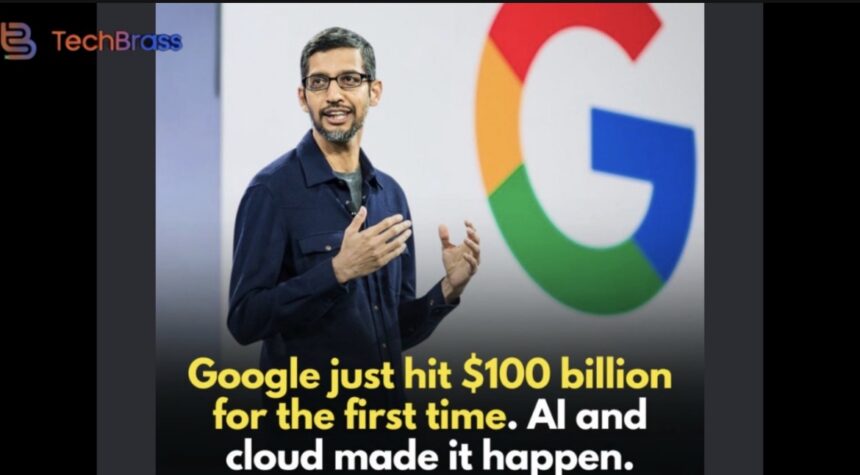
If you asked Google its own worst day ever, the answer would now be October 29, 2026.
Alphabet’s shares fell more than 13%, its biggest-ever market value wipeout at over $500 billion, after disappointing search and advertising sales. That’s more than most companies on Earth are worth in total. The strange part is that Google’s search business didn’t shrink.
What Actually Happened
Alphabet reported its third-quarter results on October 28. Search revenue still grew 12% year over year to $63.25 billion, but searches through Google’s AI Mode generate less revenue than traditional search.
That is the real story. A classic Google results page is a wall of ads and links, and every click is a payday. An AI answer gives you what you need in one go. Fewer clicks means fewer ads sold.
At its low, Alphabet had lost $524 billion in market value, the second-biggest one-day loss ever for a US-listed company, behind only Nvidia’s roughly $593 billion on January 27, 2025.
The Trap Google Built for Itself
Google faces an uncomfortable choice:
- Push AI Mode and risk cannibalizing its most profitable product.
- Hold back and risk users drifting to ChatGPT and other chatbots.
Neither option is comfortable, and investors clearly noticed. The reaction was also about spending. The headline we’re reacting to frames it as chatbots coming for Google, and the market is pricing in that fear.
The Hypothetical Nobody Wants to Say Out Loud
Here is a thought experiment, not a prediction. Imagine that in five years, most people never see a list of blue links. They ask, get an answer, and leave. Who pays for the web then?
Publishers depend on search traffic. Small businesses depend on being found. If the answer replaces the click, the economics of the internet get rewritten. That could be a disaster or a long-overdue reset, depending on who you ask.
Who Wins, Who Loses?
- Possible winners: AI chatbot companies, and users who simply want answers faster.
- Possible losers: ad-driven publishers, SEO-dependent businesses, and Google’s own margins.
- The wild card: whether Google can find an AI ad format people tolerate. That is a open question, not a certainty.
What This Means for You
If you run a website or business, don’t panic, but diversify. Build an email list, a community, and a brand people search for by name. If you’re an everyday user, expect AI answers to keep growing, along with the ads that will eventually fund them.
FAQs
Did Google’s search business collapse?
No. Search revenue still grew 12%. The fear is about future monetization, not current sales.
Is this a one-day panic?
Possibly. Big drops have rebounded before, but nobody can promise that here. This isn’t financial advice.
Is it really chatbots doing this?
Partly. Reports point to AI’s threat to search plus heavy AI infrastructure spending. It’s a combination, not a single cause.
The Bottom Line
Google didn’t lose $500 billion because it failed. It lost it because the thing that made it rich may be the thing AI makes obsolete, and Google is building that AI itself.
Would you give up the classic list of search results for an AI answer, even if it meant fewer websites survive? Tell us in the comments, and follow TechBrass for the next chapter of this story.